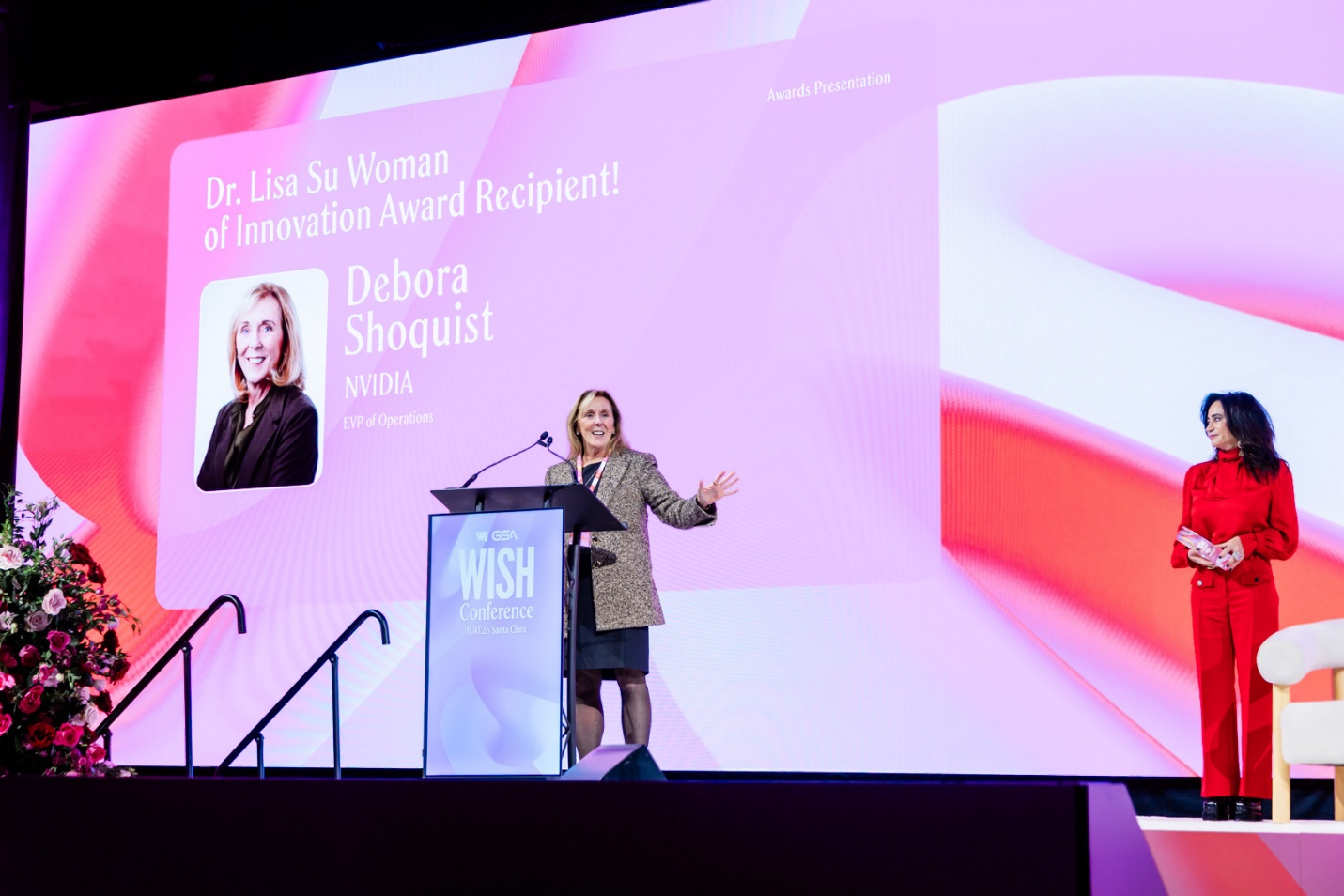
Deb Shoquist 帶領 NVIDIA 的營運業務,統管其人工智慧(AI)平台背後的供應鏈與製造工作。這樣的描述雖然概括了她的職責,卻遠不足以呈現她數十年來所促成的一切。
Shoquist 與她的團隊以及遍布全球的製造合作夥伴,讓 NVIDIA 得以全年持續推出世界領先的技術。
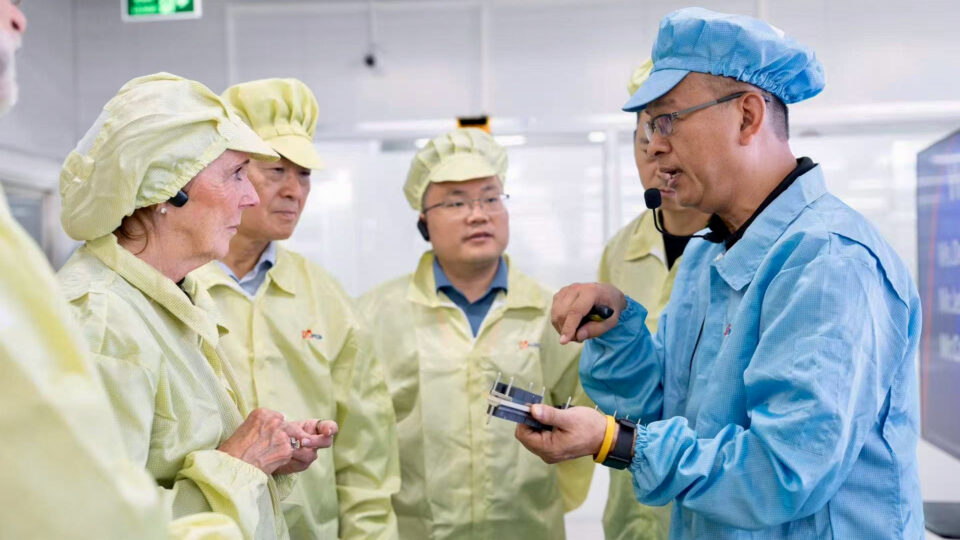
團隊的成功,很大程度上歸功於她與全球頂尖製造商建立的深厚合作關係,包括台積電、鴻海、緯創、矽品、京元電子、欣興電子、Lumentum、Coherent 及艾克爾國際科技。台積電自 1998 年起便與 NVIDIA 合作,而矽品與京元電子早在二十多年前,就已為 NVIDIA 提供晶片封裝與測試服務。
對 Shoquist 而言,隨著每一代技術對背後的人員和工具提出更高要求,每一次在工廠現場攜手解決挑戰,都讓這些合作關係更加緊密。
談到她所倚賴的全球合作網路時,她總是先談起「人」。在台灣,有一位供應商為了盡快推進生產,在凌晨三點致電她,提出最新問題的解決方案;還有越南的工廠員工,對她唯一的請求,就是提供更多工具,好讓他們完成更多的工作。她始終記得那些在 NVIDIA 規模尚小時就給予支持的合作夥伴,以及他們為促進彼此成長所付出的努力。
Shoquist 每季都與主要供應商會面,每年也會花上六週走訪台灣、中國、韓國、越南及美國的合作夥伴,交流場域從會議室一路延伸至工廠現場。
最近,她暫時停下走訪行程,接受 2026 年蘇姿丰博士創新女性獎(Dr. Lisa Su Woman of Innovation Award),並分享她如何發掘合適的人才與企業,共同構想並大規模產出前所未有的技術。
Foxconn
Q: How would you describe your job to someone outside NVIDIA?
A: At the most basic level, our job is to convert designs into the physical world. Our design team creates a blueprint, and our job is to transition it into a reliable, high-performance supply chain.
A matchmaker is probably the best analogy. You have to find the partner that matches your ramp style and has the technology that can meet the needs of very precise designs. The supplier has to be financially strong enough to invest in our ramps. They have to be highly technical. And they have to be willing to do something that has never been done before.
If you don’t have all three, you can’t create products at the volume and speed that we need. You need those three legs, and in some cases, if you only have two, you have to invest in the company to make them a partner.
Q: What’s an example of that in practice ?
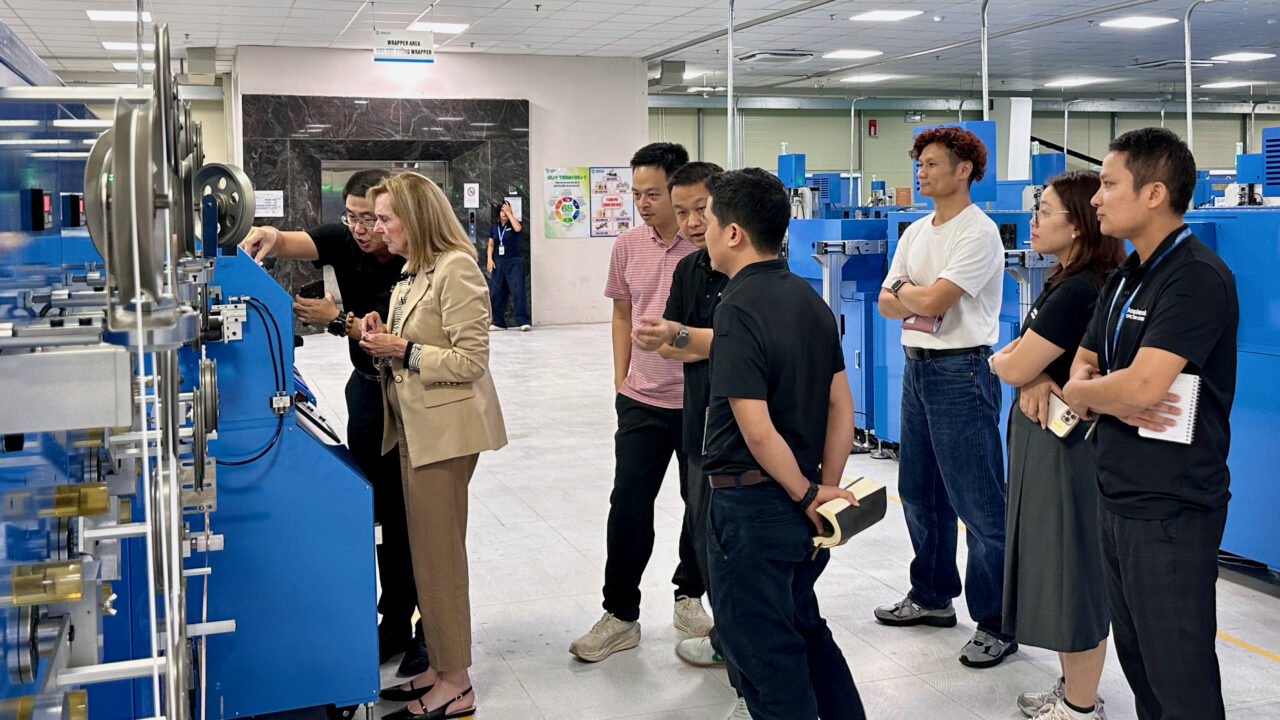
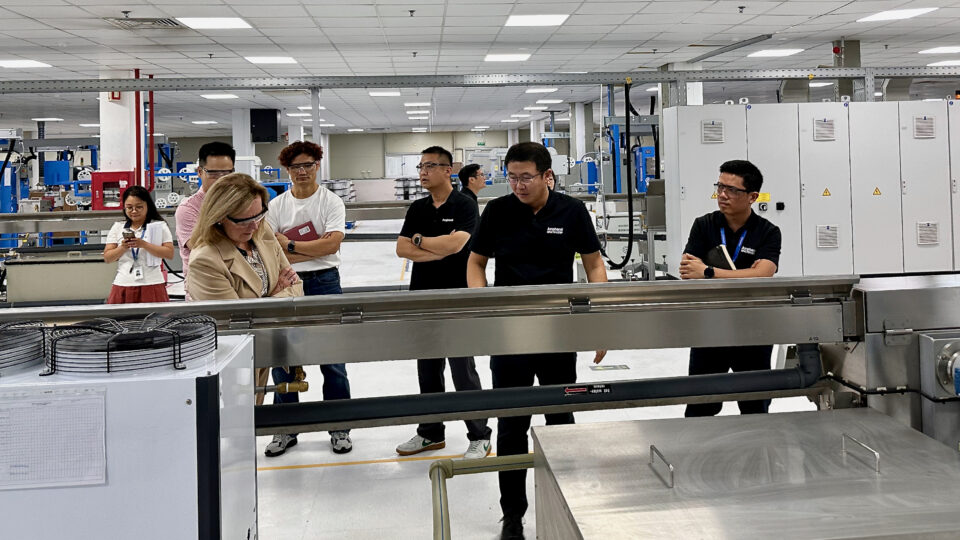
A: Amphenol’s cable cartridge is the most complex interconnect assembly they have ever built. When I recently visited the Vietnam factory, now in full production, I was struck by the level of precision required to build a product of this complexity.
In this large cable cartridge, there are 1,500 small cable legs. Each one requires a very precise assembly to yield a quality level of less than 1 DPPM, or defect part per million. Amphenol built over a hundred automated lines to produce this product at the speed and scale we require. That takes know-how and technology, but it also takes heart, willingness and dedication.
Creating anything of that complexity and precision with a supplier forges the partnership. The partners NVIDIA maintains are the ones who supported us when we were small, and yet are willing to scale with us today.
Q: What changed as NVIDIA went from selling chips to building systems and platforms?
A: When we were primarily a chip manufacturer, we were small, and the semiconductor industry was at scale. In that environment, it was about picking the best technology match for the products we envisioned.
As we became a data center systems company, we needed more partners. But we’ve also now entered into new technology areas where the scale of the supply base is still developing.
For example, our optical component partners have the technology and the willingness, but they don’t yet have the scale or capital to build fabs for the volume we need. To grow, we needed to support and invest, like we did with Coherent and Lumentum.
Beyond that, with products like CPO (co-packaged optics), we’re creating entirely new supply chains with scale partners that are new to the optics world. Leading the integration of talent across the supply chain is the key to driving this incredible technology to high volume quickly.
Wistron
Q: You clearly enjoy spending time with supply partners, and in particular on the factory floor. What have you learned there over time that can’t be learned anywhere else?
A: Over 20 years, you meet many individuals key to the success of your supply. You meet not only the CEOs, but also the people that are running the production floor. These are the people that really know the problems of manufacturing.
If you don’t have a tight working relationship with the people deeper in the organization, then it’s hard to have an open dialogue about any challenges. But when you have tight relationships, they want to help you, and they feel comfortable enough telling you, “I need better technical support on the floor. I need more quality engineers. We need a better design. We need to automate this. We need more buffers of material.”
That’s what 20 years of working with our suppliers has taught us. It’s year after year of learning from people, getting to know people deeper in the organization and creating the trust where they can tell us what we need to do to be successful with them.
Q: Demand for NVIDIA technology is already massive and growing. Your job is to make sure NVIDIA’s volume can keep up. How do you make it happen?
A: It goes back to relationships. When you decide that you’re going to push a line hard to increase volume, you have to have the relationships. You have to know their processes in detail. You have to know their people in detail, and they have to trust you. Only then are you in a position to ask them for special favors, because you can do it surgically, and your ask is credible and reasonable.
And when you’re successful together, they’re happy, you’re happy, and the appreciation for the partnership deepens. We all appreciate those that make us successful.
Coherent
Q: How do you prioritize resources across the supply chain?
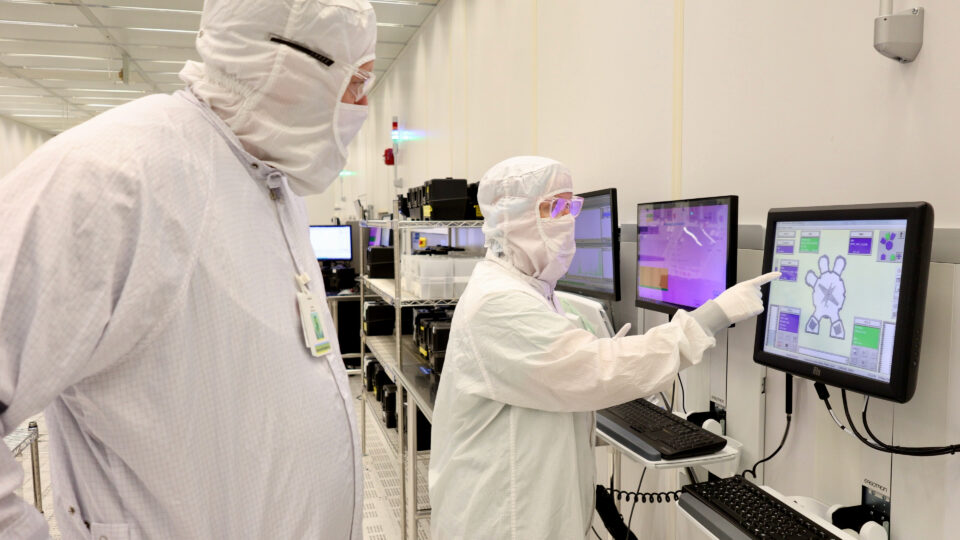
A: You need to first understand what the most critical components are, and protect and prioritize production around them. We need wafers like we need air. And the critical component is the TSMC chip. As it comes out of assembly every week, we decide what factory gets what chip.
Every week, we look at factory performance. If a particular factory yield is low, if their time of ownership is not at the level we want, they don’t get more chips that week.
We keep track of every chip, from the identification number on the die all the way to the customer invoice. If you want to be our supplier, you have to support that traceability process. With that process, we took the time it takes from chip out at TSMC to system out at Foxconn and Wistron from five to two weeks when supply and demand requires it.
Think of the supply chain as a large circulatory system with pathways everywhere — and when you need to accelerate any branch of it, you have the power to do that. We have the capability to do that. It’s empowering and exciting.
Amphenol
Q: What’s an example of a time things didn’t go as planned? How did you, the team and your partners find a way forward?
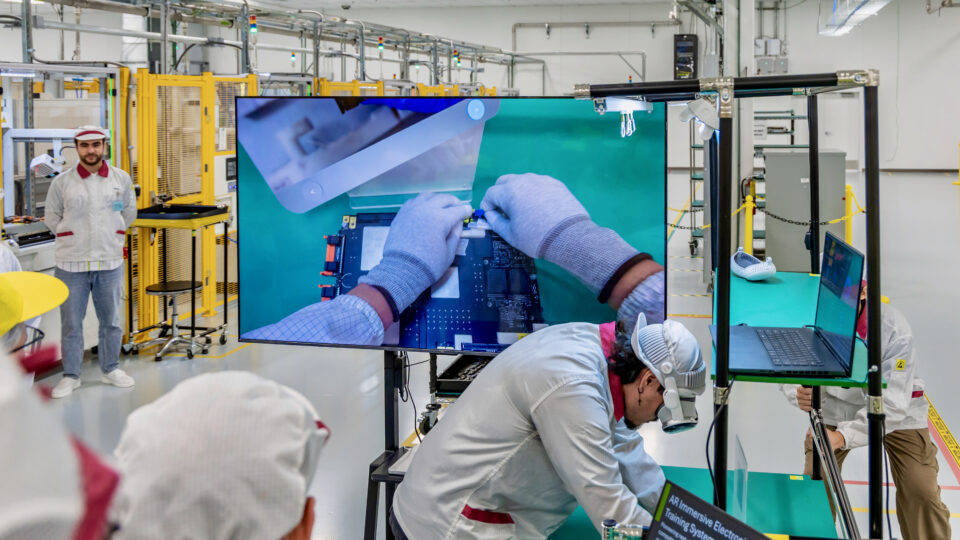
A: We were getting ready to go to volume production with Foxconn and Wistron for the compute board of NVIDIA GB200. The last step in the process was a test managed by an automated handler — a completely new approach for us, developed to meet the demands of high-volume throughput for these complicated products. During the initial ramp, the throughput was significantly below plan.
The operations director of Taiwan manufacturing made the call that to protect the product and shipments, he needed to disable the entire process and return to manual test loading. Our manufacturers backed him without question and brought in the necessary manpower to meet the immediate needs, literally hundreds of operators. That kept production moving, but would not solve the throughput requirement of full production.
As with any operations problem, the root cause had many elements to it: test tray assembly, test tray design, automation hardware design, automation control software, product yield. From all viewpoints, it was a difficult problem to resolve quickly.
That’s when we executed the NVIDIA swarm. Teams from NVIDIA design engineering, operations industrial, and product and test engineering, as well as from Foxconn automation engineering, flooded the line with talent to redesign and reactivate the line before the scale ramp hit.
This is not an unusual occurrence when there is a problem in operations. All teams at NVIDIA are street fighters — action-oriented, and know no organizational boundaries. We say that “the mission is the boss,” but we also live “the mission is the boss.”
Q: What makes this work so exciting for you?
A: Operations is a very empowering place to be at NVIDIA. Our team is designing and implementing changes to the supply chain constantly to meet the strong demand of our new products. The challenges are understandably high, but we’re always given the resources we need to be successful. The only thing between our goals and our success is our own creativity. That is exhilarating.